By the Way What Was Your Name Again Song
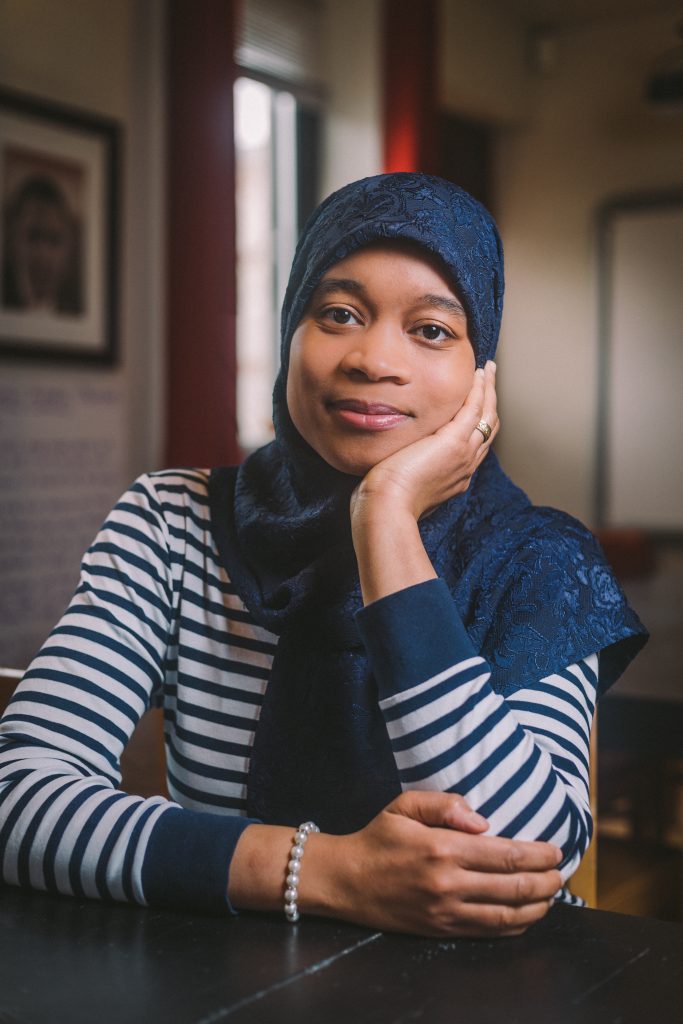
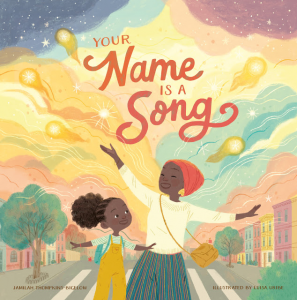 Happy Publication Day to author Jamilah Thompkins-Bigelow! Her latest flick volume, Your Proper name is a Song, releases today.
This phenomenal picture book (illustrated by Luisa Uribe and published by Innovation Press) is the story of a young girl who doesn't want to go back to school later on the first day because no i is able pronounce her name…and of a mother who encourages her daughter to reframe and face the situation in an empowering way.
I had the opportunity to read an ARC of Your Name is a Song and before I was even one-half-way through, I knew this was going to be i of the star releases of the year. I reached out to Jamilah to find out the story behind YNIAS. Here's what she told me:
* * *
TFB: The first time I readYour Name is a Vocal, I said to myself, "This ane is really special." What motivated y'all to write this particular story?
JT-B: I was motivated by the kids I've worked with throughout the years who have beautiful names but might not recognize those names as being so because of the ways their names are mispronounced or mocked. I'm hoping they see themselves in the main character (whose name isn't revealed until the finish) and get through the same empowering journeying. I idea most how they probably needed an affirming voice telling another story about their names. Mispronouncing or mocking someone's name tin can exist a mode of belittling a child even if unintentionally, and I wanted those kids to come away from reading this book feeling merely equally proud as the principal graphic symbol.
TFB: Did anyone ever say or do anything to brand you experience bad nearly your name growing up?
JT-B: A few times. I had a teacher call me Jamal all schoolhouse year no matter how many times I corrected her. A boy used to call me Ja-Miller Lite for kicks. I remember my twin brother got it the worst. His proper name is Bilal (Bee-Laal), which is the name of a very important celebrated Muslim effigy, only kids would always telephone call him "Blah" and snicker and teachers almost never tried to get information technology right.
TFB: What was your reaction when you first saw the fine art for your YNIAS? Were you at all involved in the process of identifying the illustrator, Luisa Uribe?
JT-B: Love, love, love! I loved the art she produced from the first because I could see how much she loved these characters in the lilliputian details she included and the sunny colour palette.
I definitely had a vox in choosing the illustrator and nosotros (my editor, agent, and I) went through a number of portfolios before I was introduced to Luisa'due south work. I saw her beginning sketches for the book and I knew she was correct for information technology. Her piece of work is visually stunning, period, only what's more important is from the first, she seemed incredibly attached to this project. She seemed to love these characters and their story and information technology shows in her fine art.
TFB: Can you lot share your favorite spread for the book? Why is it your favorite?
JT-B: This question is impossible to reply because I probably have several favorites. Luisa did an amazing chore! One I admire that hasn't been shared every bit much in previews is a tender moment when Momma has helped our main graphic symbol feel proud of her name and leaves her at the schoolhouse yard gate. This is this girl'due south fourth dimension to be strong on her ain and Momma is giving her her approving and letting this daughter know that she can definitely handle this situation.
TFB: What are you hoping this story does for the reader? How do y'all hope information technology makes them feel? What do yous hope someone might acquire or accept away?
JT-B: I'1000 hoping that this is an empowering and loving book for readers whose names haven't always been and so valued. I want these readers to feel that Momma has got their backs too. I desire them to feel like singing their names past the end of it. And I'm hoping that this book also creates empathy, especially from people who have names from the dominant culture and may never have thought well-nigh how the way they care for the names of others can exist demeaning.
TFB: Why is YNIAS an important book to use in classroom settings? Practice you take any professional advice for educators on how they could or should use it with their students?
JT-B: For the same reasons I just stated: because it can empower and create empathy. This is specially important in US classrooms that are taught predominantly by white teachers while the children in those classrooms are increasingly populated by Black children and children of color. I experience get-go that teachers themselves may desire to read and sit withYour Name is a Song and reflect on how they have treated students with names they found hard to pronounce in the past. Have they made jokes about certain kinds of names? I think they need to make a delivery to respecting and proverb the names of their new students correctly, and they need to country this explicitly to students from the very commencement day of schoolhouse. And and so, they need to do the work to get their names right and to not embarrass them. Don't make your kickoff interaction with a student exist you loudly taking attendance if that means loudly maxim their name wrong. I say this as a onetime classroom teacher; at that place are multiple ways to take attendance without doing the embarrassing first-mean solar day-of-schoolhouse roll phone call. I think reading this volume aloud could be used to underscore that commitment and to too accept discussions about how to ensure everyone feels like their identities are validated in the classroom. I also remember this is a volume that could launch a schoolhouse year exercise of celebrating and learning well-nigh identity and diversity.
TFB: If you were speaking directly to someone right know who had suffered any kind of microagression or traumatic experience regarding their name—or anything specific to their cultural identity—what would you desire to say to them?
JT-B: I'd say: READ MY BOOK! Run out and buy information technology Now! I'm joking, simply then again… I'm not. I wrote this book specifically for the person you're describing. In talking to adults who were able to review the book in accelerate, I've heard that this volume was a healing book for them. This give-and-take "healing" has been used multiple times and I cherish and am humbled by that word. I've read bloggers write once again and again "my name is a song" in their reviews after reading this volume because they needed to say those words. Their younger selves needed those words. So, I say to that person, "Your name is a vocal." Who you lot are is a vocal. Your identity is beautiful, it is valuable, and you didn't deserve to take your identity–whatsoever attribute of it–treated that way.
Your Name is a Song is bachelor wherever books are sold. Again, Happy Volume Birthday, Jamilah!
Source: https://thebrownbookshelf.com/2020/07/07/do-you-know-your-name-is-a-song/
0 Response to "By the Way What Was Your Name Again Song"
Post a Comment